
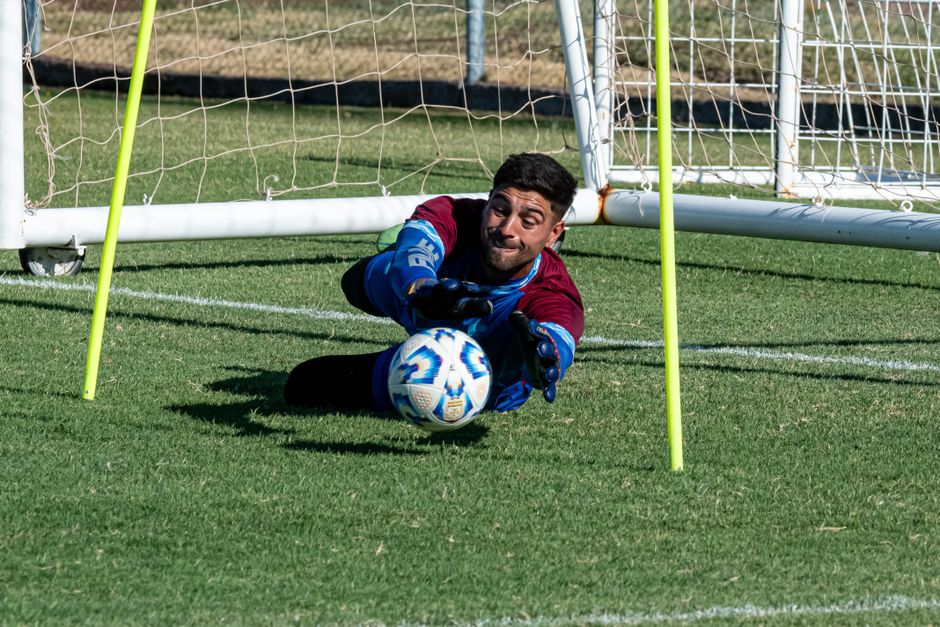
Effective goalkeeper training develops more than spectacular saves. A strong session improves set position, footwork, handling, diving technique, communication and distribution in situations that resemble a real match. Players can make steady progress on a full-size pitch, a smaller field or a safe open area, provided the exercises match their age, experience and fitness.
What goalkeeper training should develop first
Start with body position and movement before adding powerful shots. The goalkeeper should stay balanced on the balls of the feet, keep the knees slightly bent, position the hands in front of the body and remain ready to move in any direction. Training should then connect this position to the decisions a keeper makes under pressure.
- Footwork: Short side steps, quick adjustment steps and controlled forward movement help the goalkeeper reach the correct line before the shot.
- Handling: The keeper should learn to catch balls at chest height, gather low shots and use a secure two-handed technique whenever possible.
- Shot stopping: Diving should be introduced after the player understands how to set the feet, lower the centre of gravity and land safely.
- Distribution: Passing, rolling, throwing and kicking allow the goalkeeper to start attacks instead of simply clearing the ball.
- Communication: Clear instructions to defenders are essential during crosses, corners, through balls and defensive transitions.
Practical goalkeeper drills
Set-position and footwork drill
Place two cones several metres apart. The goalkeeper starts in the middle, takes short side steps to one cone, returns to the centre and repeats on the other side. A coach or teammate then gives a simple verbal cue such as “left,” “right” or “set” before serving a gentle ball. The keeper should finish every movement balanced and facing the ball rather than crossing the feet at high speed.
Handling and rebound control
Begin with catches from short range. Progress from chest-height serves to low balls, bouncing balls and shots directed just outside the body. After each save, the goalkeeper should bring the ball into the body quickly and check for a second attacker. If a clean catch is not possible, the priority is to push the ball into a safe area rather than back into the centre of the penalty area.
Low-save technique
For a controlled low save, the goalkeeper moves the nearest foot toward the ball, lowers the body and brings the hands behind the ball. The chest should follow the hands so the ball cannot pass underneath. Practise from a short distance first, then increase the pace. Avoid beginning with full-power shots or hard ground surfaces.
Diving progression
Teach diving from the knees or a low seated position before adding movement and faster service. The keeper reaches with both hands, lands on the side of the body and keeps the ball protected against the chest. Once the landing is consistent, add one or two adjustment steps before the dive. Grass or another forgiving surface is preferable; concrete and uneven ground should not be used for diving practice.
Crosses and high-ball decisions
Use a clearly marked area and begin with easy, predictable deliveries. The goalkeeper must decide early whether to catch, punch or stay. The decision should depend on the ball’s height, speed, traffic and the keeper’s position, not on a desire to make a dramatic play. Add passive defenders before progressing to realistic challenges.
Distribution under pressure
Work on short passes with both feet, then add receiving across the body and playing away from an imaginary press. Include throws to a wide teammate, low driven passes and longer kicks. The goalkeeper should scan before receiving and choose the safest option that keeps possession or moves the team away from danger.
A simple weekly goalkeeper training plan
Two or three focused sessions per week are enough for many developing players when matches and school or club commitments are included. Keep the quality of repetitions high and allow recovery between demanding sessions.
| Session | Main focus | Suggested work |
|---|---|---|
| Session 1 | Technique | Warm-up, footwork, handling, low saves and controlled distribution |
| Session 2 | Match actions | Crosses, angles, breakaways, communication and small-sided games |
| Session 3 | Optional development | Mobility, catching under fatigue, passing and light reaction work |
Each session can begin with 10 to 15 minutes of mobility and movement preparation, followed by technical work, realistic actions and a short cool-down. Younger players generally benefit from shorter blocks, more touches and less emphasis on repeated maximum dives. Older or more experienced keepers can add decision-making, pressure and match-like fatigue.
How to improve goalkeeper fitness safely
Goalkeeper fitness combines acceleration, lateral movement, jumping power, coordination and the ability to recover after an action. Use short sprints, shuffle-to-sprint exercises, bodyweight squats, split squats, lunges, calf raises and controlled core exercises. Strength work should support movement quality rather than leave the player exhausted before technical practice.
Warm up before diving or explosive jumping. Stop if there is sharp pain, dizziness or loss of control. Hydration matters particularly during hot training conditions, and sessions should be adjusted for heat, poor air quality, flooding or unsafe playing surfaces. Coaches working with youth players should prioritise supervision and proper landing technique over volume.
Adapting goalkeeper practice to local conditions
Specialist equipment is useful but not essential. Cones can be replaced with shoes or visible markers, and a wall can provide predictable rebounds when no server is available. A smaller pitch can improve footwork and decision-making, while a full-size goal is helpful for angle work and crosses. Check that homemade markers are soft and that the practice area is free from holes, stones and traffic.
In African football environments, training may take place in heat, on artificial turf, hard ground or uneven grass. Change the session rather than forcing a drill: reduce dive volume on hard surfaces, use more standing handling and distribution, train during cooler periods, and keep water available. The objective is repeatable technique that transfers to the player’s actual match conditions.
Common goalkeeper training mistakes
- Starting with powerful shots before the keeper can set the feet and handle the ball.
- Repeating dives without enough recovery or without checking the landing surface.
- Training saves in isolation while ignoring passing, scanning and communication.
- Serving every ball from the same angle, speed and height.
- Using fatigue as the main measure of a successful goalkeeper workout.
- Teaching the keeper to catch every cross when punching or holding position is safer.
Frequently asked questions
How often should a goalkeeper train?
Most developing goalkeepers can manage two focused goalkeeper sessions each week, with a third light session when recovery, school and match demands allow. Team training and matches already provide additional goalkeeper actions.
What equipment is needed for goalkeeper drills?
A ball, suitable goal or target, visible markers and a safe surface are enough to begin. Goalkeeper gloves can improve grip, but they do not replace correct hand shape, body position or safe technique.
How can a goalkeeper improve reactions?
Use varied, short-range serves after the keeper has established a balanced set position. Deflections, visual screens and changes of direction can be added gradually. Reaction exercises should still include a decision and a controlled recovery, not only random rapid shots.
Should goalkeepers do strength training?
Yes, appropriately scaled strength training can support jumping, stability and injury prevention. Begin with controlled bodyweight movements and receive guidance from a qualified coach or fitness professional before adding heavy loads.
