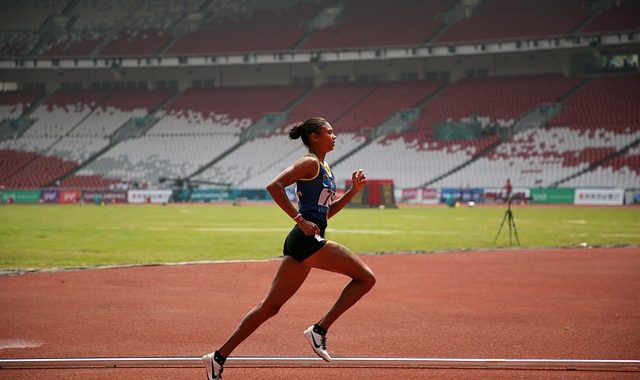

To increase stamina for sports, combine regular aerobic training with short high-intensity intervals, sport-specific practice, strength work and enough recovery. The right balance depends on whether your sport demands steady endurance, repeated sprints or both.
Stamina is not just the ability to run for a long time. It also includes how well you maintain speed, skill and decision-making as fatigue builds. A footballer, distance runner and basketball player therefore need different forms of conditioning.
What sports stamina involves
Sports stamina has two closely related parts. Aerobic endurance helps you work at a moderate intensity for a long period and recover between hard efforts. High-intensity endurance helps you repeat sprints, jumps, tackles or changes of direction without a major drop in performance.
For example, a football player may jog, accelerate, defend and sprint several times during a match. A long-distance runner needs sustained aerobic capacity, while a basketball player needs repeated bursts and quick recovery. Training should reflect those demands rather than relying on long, slow runs alone.
Build an aerobic base first
Most athletes benefit from two or three easy aerobic sessions each week. Choose running, cycling, swimming, rowing or another activity that allows continuous movement. The intensity should feel controlled: you should be able to speak in short sentences without gasping.
- Begin with 20 to 30 minutes if you are returning to exercise.
- Add about five minutes every one or two weeks when recovery is good.
- Progress toward 30 to 60 minutes for general sports conditioning.
- Keep most endurance sessions easy enough that they do not ruin your harder training.
Running stamina improves through consistency, not by making every session exhausting. If you play on hard surfaces or train in hot conditions, increase volume more cautiously and use lower-impact sessions such as cycling or swimming when needed.
Use intervals to improve repeated efforts
Once you have a basic fitness level, add one interval workout each week. Intervals train your body to work hard, recover and produce another quality effort. This is particularly useful for football, rugby, basketball, hockey and racket sports.
A simple session is six repetitions of one minute at a hard but controlled pace, followed by two minutes of easy movement. Another option is eight 20-second fast runs with 60 to 90 seconds of walking or jogging between them. Warm up first and stop the session if your technique deteriorates.
For team-sport conditioning, use movement patterns that match competition: short accelerations, controlled decelerations, lateral shuffles and changes of direction. Sprint conditioning should not replace technical practice, because fatigue can alter running mechanics and increase injury risk.
Support stamina with strength training
Strength training can make movement more efficient and help you maintain form late in a session. Two full-body workouts per week are enough for many recreational athletes. Focus on controlled exercises such as squats, split squats, hip hinges, calf raises, rows, push-ups and trunk exercises.
Use a load that allows good technique throughout the set. Single-leg work is useful for runners and field-sport athletes, while calf and hamstring training can support repeated running. Avoid placing a demanding leg workout immediately before a match or hard interval session.
Plan a weekly stamina routine
A balanced week might include:
- Monday: easy aerobic training and mobility.
- Tuesday: strength training.
- Wednesday: sport practice or interval conditioning.
- Thursday: rest or light cycling, walking or swimming.
- Friday: strength training with a moderate load.
- Saturday: longer easy session, match or sport-specific practice.
- Sunday: rest or gentle recovery activity.
Do not copy this schedule exactly if your club already has several intense practices. Count matches, sprint sessions and hard gym workouts together. Two or three demanding sessions in a row can reduce performance and make recovery harder.
Hydration, food and recovery
Dehydration can make exercise feel harder, especially in hot and humid parts of Africa. Drink regularly during the day and take fluids to longer training sessions. For sessions lasting more than about an hour, particularly in heavy heat or sweat, an electrolyte drink or salty food can help replace sodium. Do not wait until severe thirst appears.
Eat carbohydrates before demanding training to support running and high-intensity work. Rice, oats, potatoes, fruit, bread and maize-based foods can all provide useful fuel. Include protein after training from foods such as eggs, milk, yoghurt, fish, beans, lentils, chicken or lean meat. A mixed diet supports both stamina and muscle repair.
Sleep is part of sports conditioning. Aim for a consistent sleep routine and allow easier days between hard sessions. Persistent heavy legs, irritability, poor sleep, a falling performance level or an unusually high resting heart rate can signal that your workload is too high.
Common mistakes that limit endurance
- Making every workout hard: easy sessions should remain easy enough to support recovery.
- Increasing distance and speed together: change one major training variable at a time.
- Ignoring sport demands: long runs alone do not prepare an athlete for repeated sprints and sharp changes of direction.
- Training through pain: sharp pain, swelling, chest discomfort, faintness or unusual breathlessness needs medical attention.
- Neglecting heat: train at cooler times where possible, reduce intensity during extreme heat and take breaks in shade.
Frequently asked questions
How long does it take to improve sports stamina?
Many people notice better exercise tolerance within three to six weeks of consistent training, although larger changes take several months. Progress depends on starting fitness, sleep, nutrition, training quality and the demands of the sport.
Is running the best way to increase stamina?
Running is effective for many athletes, but it is not the only option. Cycling, swimming, rowing and brisk uphill walking can build cardiovascular endurance with less impact. Use the activity that fits your sport, joints, equipment and training environment.
How often should I train for endurance?
Two or three aerobic sessions plus one harder conditioning session per week is a reasonable starting point for many adults. Athletes with frequent team practices may need fewer additional sessions. Increase training gradually and keep at least one genuine recovery day each week.
Should I train when I feel tired?
Mild tiredness is common, but severe fatigue, illness, dizziness or worsening pain should not be ignored. Replace a hard session with rest or easy movement and seek professional advice if symptoms persist.