Effective 400m hurdles training develops three abilities at the same time: running fast between hurdles, maintaining an efficient rhythm over them and holding form when fatigue becomes severe. A useful programme should therefore combine sprint mechanics, hurdle drills, speed endurance, strength and recovery rather than treating the event as either a sprint or a distance race.
What a 400m hurdler needs to improve first
The event is won by preserving speed and technique late in the race. Most athletes should first establish a reliable hurdle pattern at controlled intensity before trying to run every session at full race pace. The main training priorities are:
- Hurdle mobility: enough hip, ankle and thoracic mobility to clear the barrier without twisting or jumping excessively.
- Running mechanics: posture, front-side knee lift, active foot strike and relaxed arm action.
- Between-hurdle rhythm: consistent steps and an ability to adjust without losing balance.
- Speed endurance: the capacity to keep running mechanics together during the final 150 metres.
- Strength and resilience: stronger hamstrings, calves, hips and trunk help support repeated high-speed training.
For athletes training on grass, compact dirt or a basic track, the priorities remain the same. Use a safe, clearly marked surface and adjust volume when the surface is uneven. A lower hurdle setting or reduced spacing can help an athlete practise rhythm without forcing poor technique.
Hurdle drills for rhythm and technique
Hurdle drills should improve movement quality rather than simply count repetitions. Begin with a warm-up that includes easy jogging, skips, leg swings, mobility and progressive strides. Then select drills that match the athlete’s current level.
- Walkovers: Walk over low hurdles with deliberate lead-leg and trail-leg positions. Keep the torso tall and avoid swinging the leg across the body.
- Lead-leg and trail-leg drills: Perform these beside a hurdle or over a low barrier, focusing on a quick return to sprint position.
- Low-hurdle rhythm runs: Use reduced hurdle height and spacing to practise relaxed steps and an active landing.
- Three-step rhythm work: Short repetitions over low hurdles can develop timing, but stop if the athlete begins reaching for the hurdle or landing heavily.
- Hurdle walk-back circuits: A series of low barriers with a walk-back recovery allows technical practice without excessive fatigue.
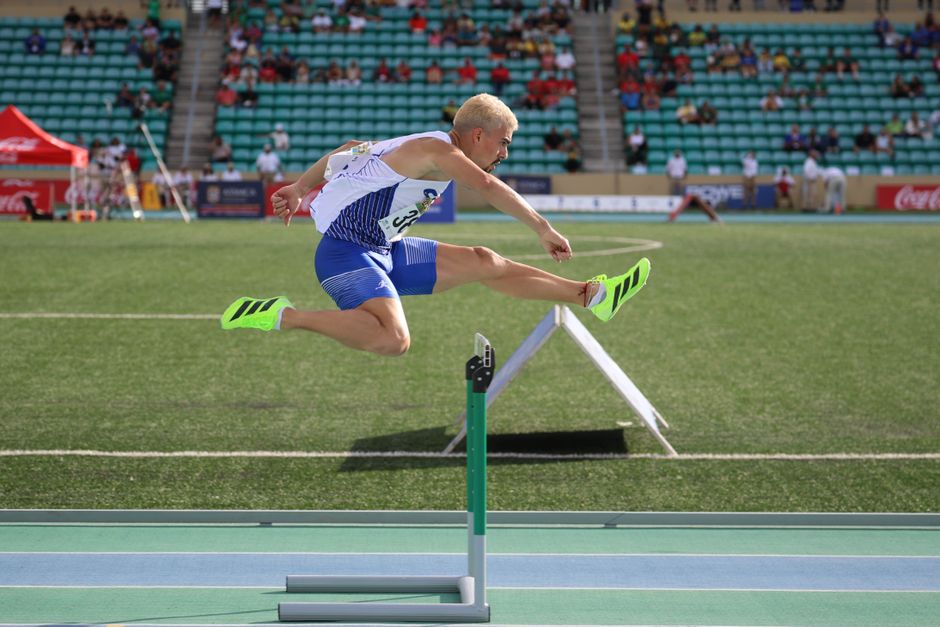
During a 400m hurdles workout, the lead leg should not be the only focus. Athletes may need to clear a hurdle from either side late in the race, particularly when fatigue or a disrupted stride changes the approach. Practise both legs at low intensity before using the weaker side in demanding repetitions.
A practical weekly 400m hurdles training plan
A developing athlete often benefits from two demanding track sessions, one strength session and several low-intensity recovery days. The exact workload should depend on training age, competition schedule, injury history and available coaching.
| Day | Focus | Example content |
|---|---|---|
| Monday | Acceleration and technique | Short sprints, low-hurdle drills and full recovery between runs |
| Tuesday | Recovery | Easy aerobic work, mobility and light technical exercises |
| Wednesday | Speed endurance | Longer runs such as 150m to 300m repetitions with controlled volume |
| Thursday | Strength and mobility | Single-leg strength, posterior-chain work, trunk control and mobility |
| Friday | Hurdle rhythm | Low or moderate hurdle repetitions, rhythm changes and relaxed fast running |
| Saturday | Easy conditioning | Easy running, drills or a low-impact alternative |
| Sunday | Rest | Complete rest or gentle mobility |
Do not turn every day into a hard day. Sprinting and hurdling place high demands on the nervous system and connective tissues. At least 48 hours between the hardest speed sessions is often useful, particularly for younger athletes or anyone returning after a break.
Speed endurance and race-specific sessions
Speed endurance training should progress from controlled repetitions toward race-specific work. Early in a training cycle, sessions can use shorter distances with generous recovery, such as 6 × 150m or 5 × 200m. Later, an athlete may use longer repetitions or selected sections of the race, such as hurdle 5 to hurdle 10, to practise maintaining posture under fatigue.
Race-specific 400m hurdles sessions should not be performed every week at maximum effort. Useful options include:
- Runs over a reduced number of hurdles at competition rhythm.
- Broken 400m sessions, such as a fast segment followed by a short recovery and another fast segment.
- Long runs without hurdles followed by technical hurdle repetitions while tired.
- Controlled full-race rehearsals with emphasis on rhythm and posture rather than a personal best.
Recovery between repetitions matters. If the athlete cannot maintain reasonable mechanics, increase the recovery or reduce the number of runs. Poor-quality repetitions teach the wrong rhythm and increase injury risk.
400m hurdles race strategy
A race plan should be based on rhythm, not an unsustainable sprint to the first hurdle. The opening section should feel quick and controlled, with the athlete reaching the first hurdle in a balanced position. Through the middle of the race, maintain an active step pattern and avoid pressing so hard that the hips drop.
The final two or three hurdles require concentration. Athletes should expect shorter or less comfortable steps as fatigue rises and prepare to adjust rather than panic. A lower centre of mass, active arms and eyes focused beyond the hurdle can help preserve forward movement. Training should include occasional rhythm changes so the athlete can cope with a missed step or a change of lead leg.
Strength, recovery and injury prevention
Strength training for 400m hurdlers should support force production and control without creating unnecessary fatigue. Useful movements include split squats, Romanian deadlifts, step-ups, calf raises, hamstring exercises, rows, presses and anti-rotation trunk work. Begin with manageable loads and prioritise stable, controlled movement.
Recovery is part of the training plan. Sleep, sufficient food and fluids, gradual increases in running volume and regular mobility work all matter. In hot conditions, common across many parts of Africa, schedule demanding sessions during cooler periods where possible and replace fluids after heavy sweating. Athletes should stop training for sharp pain, altered running mechanics or symptoms that worsen during a session.
Frequently asked questions about 400m hurdles training
How often should I train over hurdles?
Many developing athletes can use one technical hurdle session and one lighter rhythm exposure each week. Full-intensity hurdle racing should be less frequent. The right frequency depends on age, experience, technique and recovery.
Should I always use the same lead leg?
Use the leg that matches the planned rhythm, but practise both legs. Two-sided hurdle skills make it easier to adapt when fatigue changes the approach to a barrier.
How can I train without competition-height hurdles?
Use low barriers, cones or marked lines for rhythm and sprint mechanics, provided the setup is safe. Do not use improvised objects that can catch the foot. Competition-height technique should be introduced with proper equipment and coaching.
How long does it take to improve?
Rhythm and mobility may improve within several weeks, while speed endurance and race consistency usually require a longer progression. Track training quality, recovery, hurdle rhythm and race performance instead of judging progress from one difficult session.